
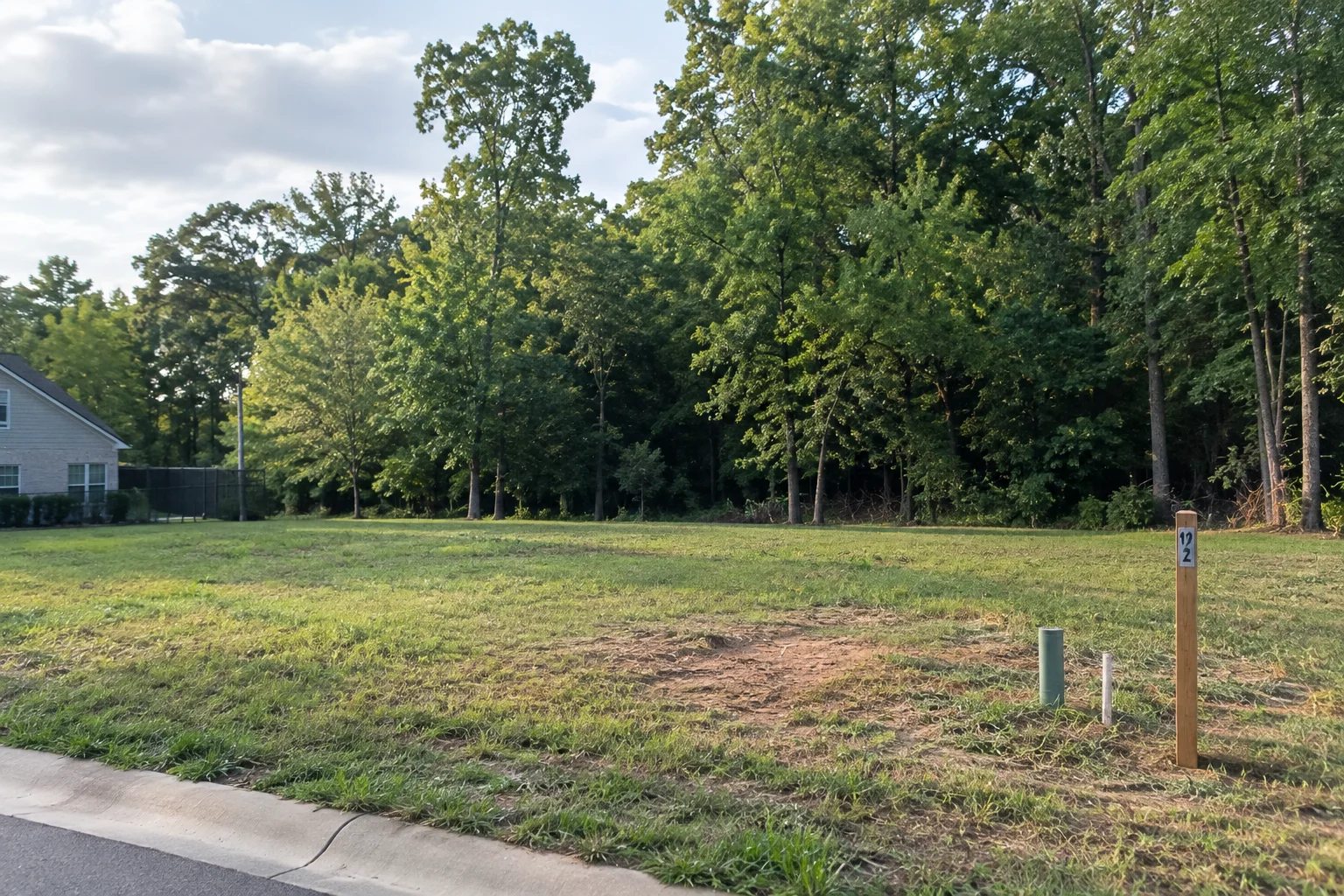
How Much Does It Cost to Build on Your Lot in Northern Virginia? A Budget-Planning Framework
The cost to build a custom home on your own lot in Northern Virginia typically falls between $250 and $450 per square foot for the construction portion alone, with site preparation, utility connections, permits, and professional fees adding $50,000 to $150,000 or more depending on the lot conditions and location. The total project cost for a 3,000-square-foot custom home on an owner’s lot in Alexandria, Arlington, Fairfax, or Loudoun County often lands between $850,000 and $1.5 million before land cost. Understanding where each dollar goes is the first step toward a realistic budget for homeowners who want to build a custom home on your lot in Northern Virginia, Maryland, or the Delaware beaches.
Key Takeaways
- Construction cost per square foot in Northern Virginia ranges from approximately $250 to $450, depending on the collection level, finishes, and lot complexity. The total project cost includes additions for site work, permits, and professional fees.
- Site preparation and utility connections are the most variable line items. A flat, cleared lot with public utilities at the street costs far less to prepare than a wooded, sloped lot requiring a septic system and well.
- County-level costs in Northern Virginia vary. Arlington and Alexandria tend to run higher than Loudoun and Prince William, driven by labor availability, permit fees, and site access conditions.
- The total cost of building on your own lot equals land cost plus site preparation plus construction cost plus professional fees. Skipping any category in budget planning leads to an inaccurate projection.
- A fixed-price builder eliminates cost uncertainty on the construction portion, though site work may still carry some variability based on conditions discovered during excavation.
What cost categories make up a build-on-your-lot project?
A build-on-your-lot project has four major cost categories, and each one must be accounted for before the homeowner can calculate a realistic total project budget. Land cost is separate from construction cost but must be factored into the overall financial plan, especially when the land is being financed as part of a construction loan.
The table below organizes the four categories with their typical cost ranges for Northern Virginia.
| Cost Category | What It Includes | Typical Range (Northern VA)
|
|---|---|---|
| 1. Land Preparation | Survey, geotechnical report, clearing, grading, excavation, erosion control | $20,000-$60,000 |
| 2. Utility Connections | Water tap, sewer lateral or septic, electrical service, gas line, permit fees | $15,000-$50,000 |
| 3. Home Construction | Foundation, framing, mechanical systems, interior and exterior finishes | $250-$450/sq ft |
| 4. Professional Services | Architectural plans, engineering, permit expediting, lender fees | $20,000-$50,000 |
The land preparation and utility connection categories combine to form what builders call “site work.” On a straightforward lot in an established subdivision with public water, sewer, and gas at the street, site work may cost $35,000 to $50,000. On a rural or wooded lot that requires a well, septic system, long driveway, and significant clearing, site work can exceed $100,000. The lot conditions drive this portion of the budget more than any other factor, which is why a site visit and evaluation are necessary for accurate pricing.
How does the construction cost per square foot break down by county in Northern Virginia?
Construction costs vary by county within Northern Virginia. Differences in labor availability, permit fees, site access, and the typical lot conditions in each county all contribute to the range. The table below provides planning ranges based on market data for semi-custom home construction in 2026.
| County / City | Cost per Sq Ft (Standard) | Cost per Sq Ft (Premium) | Primary Cost Driver
|
|---|---|---|---|
| Alexandria City | $280-$380 | $380-$500 | Infill site access, permit requirements, historic district rules |
| Arlington County | $290-$400 | $400-$520 | Tight lot access, high land values, strict zoning |
| Fairfax County | $260-$360 | $360-$480 | Permit complexity, larger lots offset access challenges |
| Loudoun County | $240-$340 | $340-$450 | Rual lots may need well/septic, longer utility runs |
| Pince William County | $230-$320 | $320-$420 | Lower land costs offset by longer trade commutes |
| Mount Vemon / Fort Hunt | $270-$370 | $370-$490 | Proximity to DC, established neighborhood constraints |
These ranges assume a semi-custom home with quality finishes appropriate to the market. A home built to entry-level specifications will land at the low end. A home with premium finishes, custom millwork, and high-end mechanical systems will reach the upper range. The numbers represent the construction cost only and do not include land, site preparation, or professional services.
What site conditions affect the cost of building on your lot?
Site conditions are the single largest source of cost variation in a build-on-your-lot project. Two identical floor plans built on different lots in the same county can have construction costs that differ by $80,000 or more based solely on what the lot requires to be ready for the foundation.
Clearing and tree removal. A wooded lot requires clearing the building pad, the driveway path, the septic field if applicable, and enough surrounding area for construction access and grading. Tree removal, stump grinding, and root disposal add cost. In Fairfax and Loudoun counties, where many buildable lots are partially or fully wooded, clearing can add $5,000 to $20,000 to the site-work budget.
Slope and grading. A lot with more than a 5 to 8 percent grade requires cut-and-all work to create a level building pad. Steeper slopes may require retaining walls, which are priced by the square foot of wall face and can add $15,000 to $40,000 or more for an engineered wall system.
Soil conditions. The geotechnical report reveals what is beneath the surface. Expansive clay soils require specific foundation detailing. Rock near the surface adds excavation cost and may require hammering or blasting. Poorly draining soils may require an engineered septic system rather than a conventional one, adding $10,000 to $20,000 to the utility budget.
Utility distance and availability. The further the home sits from the street, the longer the water line, sewer lateral, and electrical service run must be, and the more trenching is required. A lot where the building pad is 200 feet from the street costs more to connect than a lot where the pad is 50 feet back. If public sewer is not available, the cost of a septic system becomes a sixfigure line item.
Flood zone and critical area designations. Lots in FEMA-designated flood zones may require elevated foundations, flood vents, and additional engineering. Lots near streams, wetlands, or steep slopes may fall within Chesapeake Bay Preservation Act resource protection areas, which limit clearing and grading and require additional permits.
What permits and fees should you budget for when building on your lot?
Permit costs are a required part of the build-on-your-lot budget, and they vary by jurisdiction. In Northern Virginia, the building permit itself is typically calculated based on the construction value or square footage. Additional permits address specific trades and site conditions.
In Fairfax County, the building permit fee for a new single-family home is based on the total valuation and typically ranges from $3,000 to $8,000. Electrical, plumbing, and mechanical permits add separate fees. The grading permit, required when earth disturbance exceeds 2,500 square feet, adds its own application and review fee. Water and sewer connection fees, administered by the county or the local service authority, can range from $5,000 to $15,000 for a new connection.
In Loudoun County, the fee structure is similar but the county also charges proffers on new residential construction in certain districts. Proffers are per-unit contributions toward public infrastructure and schools, and they can add $10,000 to $30,000 or more to the total project cost depending on the zoning district.
In Arlington County and the City of Alexandria, permit fees tend to be higher than in the outer counties, and the review timeline is often longer. In Alexandria’s historic districts, additional design review by the Board of Architectural Review may be required, adding both time and professional fees to the project.
Homeowners should ask their builder to itemize all permit and fee costs in the estimate rather than lumping them into a single line. This ensures that nothing is assumed and that the homeowner understands which fees go to which jurisdiction.
How does a fixed-price builder approach a build-on-your-lot project differently?
A fixed-price builder provides a contract price for the completed home before construction begins, which changes the budget-planning equation for a build-on-your-lot project. Instead of the homeowner carrying the risk that material prices rise or that labor costs increase during construction, the builder absorbs that risk within the agreed price.
For the fixed-price model to work on a build-on-your-lot project, the builder must evaluate the lot thoroughly before providing the price. This means walking the site, reviewing the survey and geotechnical report, confirming utility availability, and understanding the permit requirements for that specific parcel in its specific jurisdiction. A fixed price offered without a site visit is not a reliable price.
The fixed-price approach does not eliminate every variable. Allowance selections (flooring, countertops, fixtures) still affect the final cost if the homeowner’s choices exceed the allowance budget. Site conditions discovered during excavation that were not visible during the preconstruction evaluation may also affect cost, though a thorough site evaluation minimizes these surprises. The difference is that in a fixed-price structure, the construction cost itself is locked, and the only changes come from owner-directed scope additions or allowance overages.
For homeowners in Northern Virginia who want budget certainty, the fixed-price model can be worth the premium it sometimes carries over a cost-plus structure. The trade is predictability in exchange for paying the builder a fee that covers the risk of cost escalation.
What timeline should you expect for building on your lot?
The timeline from land evaluation to move-in for a build-on-your-lot project in Northern Virginia typically spans 12 to 24 months, with the construction phase accounting for 8 to 14 of those months. The preconstruction phase (design, permitting, and site preparation) adds 4 to 10 months depending on the jurisdiction and the complexity of the lot.
Several factors extend the timeline on build-on-your-lot projects compared to building in a developed subdivision. The permitting process takes longer because the jurisdiction must review the plans for the specific lot rather than approving a previously reviewed plan. Site preparation on a raw lot takes more time than on a previously graded pad in a subdivision. Utility connections may require coordination with multiple agencies and utility providers, each with their own scheduling constraints.
In Fairfax County and Loudoun County, plan review times for new single-family homes typically run 4 to 8 weeks for the initial review, with an additional 2 to 4 weeks for resubmittal if revisions are required. Arlington County and Alexandria often run longer due to higher application volumes relative to staff capacity. Homeowners should budget for the permitting timeline when planning their move date and coordinating the sale of an existing home.
Frequently Asked Questions
Can I use a construction loan to build on my own lot?
Yes, and using land you already own as equity can simplify the construction loan process. If you own the lot free and clear, the land value serves as your down payment toward the construction loan. If you are purchasing the land and building simultaneously, a construction-to-permanent loan packages both into a single closing. Lenders in Northern Virginia familiar with new construction financing will require a fixed-price contract or a detailed cost breakdown from the builder, plans and specifications, and a draw schedule that aligns with construction milestones.
What is the cheapest county in Northern Virginia to build on your lot?
Prince William County and the more rural portions of Loudoun County generally offer the lowest combined land and construction costs in Northern Virginia. The trade-off is typically a longer commute to DC employment centers and, in some rural areas, the added expense of well and septic systems that offset some of the per-square-foot construction savings. The total cost of the completed home relative to its market value is a better decision metric than construction cost alone.
How do I find out if my lot is buildable?
Start with the county zoning office to confirm the zoning district, minimum lot size, setbacks, and any overlay restrictions. Obtain a boundary survey and a topographic survey. Commission a geotechnical report to understand the soil conditions. Walk the lot with a builder who can assess access for construction equipment and provide a preliminary opinion on site work costs. Only after these steps can you make an informed decision about buildability. Skipping any of them risks purchasing a lot that is not practical for the home you want to build.
Does the cost per square foot include the garage?
This varies by builder. Some builders include the garage in the total square footage for cost calculation; others price the garage separately as a flat-rate add-on. A 400-square-foot garage priced at $250 per square foot adds $100,000 to the total, so the inclusion rule matters to the bottom line. Homeowners should ask each builder explicitly how the garage is handled in the estimate and confirm whether porches, decks, and unfinished basements are included in the square footage calculation.
Are there any tax incentives for building an energy-efficient home on my lot?
Yes. Homes that meet Energy Star certification standards may qualify for federal tax credits under Section 45L of the Internal Revenue Code, which provides a credit of up to $5,000 per dwelling unit for builders of energy-efficient homes. While this is a builder credit, it can sometimes be passed through to the homeowner as a reduction in the contract price. At the state level, Virginia does not currently offer a specific tax credit for energy-efficient new home construction, but local utility providers in Northern Virginia may offer rebates for high-efficiency HVAC equipment, insulation above code minimums, and Energy Star-rated appliances.
Can I act as my own general contractor to save money building on my lot?
Acting as an owner-builder is legally possible in Virginia but carries risks that most homeowners are not prepared for. Managing subcontractor schedules, inspecting work quality, navigating permit inspections, and maintaining lien waivers is a full-time job. Construction lenders typically require a licensed general contractor on the project and will not finance an owner-builder project unless the owner holds a contractor’s license. For homeowners who want to reduce cost, negotiating the allowance levels and scope of included finishes with a professional builder is a more practical path than attempting to self-manage the construction.
How does the Delaware beaches market compare to Northern Virginia for build-on-your-lot costs?
The Delaware beaches market (Bethany, Dewey, Rehoboth, Lewes, Fenwick Island, and surrounding areas) carries its own cost structure. Land prices near the water are higher than most Northern Virginia lots, but construction costs per square foot are generally 10 to 20 percent lower due to lower labor rates in Sussex County. However, coastal construction requirements (wind-load engineering, flood-zone elevation, corrosion-resistant materials) add costs that partially offset the labor savings. A custom home at the Delaware beaches built to coastal code typically runs $225 to $375 per square foot for construction, with site work costs driven by elevation requirements and foundation type.
Ready to understand what building on your lot would cost for your specific parcel? Schedule a consultation with Character Companies. We evaluate your land, provide transparent pricing for our floor plan collections, and walk you through the building process from lot evaluation to move-in.
By Character Companies