If you’re looking at a skinny infill parcel in Alexandria — 20, 25, maybe 35 feet wide — the first question is simple: can you actually build on it? The short answer is usually yes, but a narrow lot in Alexandria almost always comes with at least one extra layer of review, whether that’s a Special Use Permit, a reduced setback calculation, or a stop at the Board of Architectural Review.
None of that makes a narrow lot a bad lot. Alexandria has thousands of parcels that predate its modern zoning code, and builders work with them regularly. But “narrow” isn’t a design preference here — it’s a zoning category with real consequences for what you can build, how tall it can be, and how long permitting takes.
This guide walks through what actually determines whether a narrow Alexandria lot is buildable: how the city defines a substandard lot, when you need a Special Use Permit, how setbacks changed for lots under 25 feet wide, and how Old Town’s historic district rules differ from a neighborhood like Del Ray.
What Actually Makes a Lot “Narrow” in Alexandria?
Alexandria’s zoning ordinance doesn’t use the word “narrow.” Instead, it defines a substandard lot: a residential lot that doesn’t meet the minimum lot size, width, or street frontage set for its zone. Whether your lot qualifies depends entirely on which zone it’s in.
As one example, the city’s R-8 single-family zone currently requires a minimum lot size of 8,000 square feet, a minimum width of 65 feet, and 40 feet of street frontage. A lot platted decades before that standard existed — which describes a lot of Alexandria’s older neighborhoods — can easily fall short on width alone, even if the house on it looks perfectly normal from the street.
Key takeaway: a lot can be “narrow” in the zoning sense long before it looks unusually narrow in person, because the comparison is to your specific zone’s current minimum, not to a citywide number.
Three Things to Check Before You Design Anything
1. Whether your zone requires a Special Use Permit
Alexandria requires Special Use Permit (SUP) approval to build a new house on a vacant substandard lot in the R-2-5, R-5, R-8, R-12, and R-20 zones. That same SUP requirement has applied to redevelopment of substandard lots — think knockdown rebuilds — since 2008. Council reviews these requests on whether the proposed house provides adequate setbacks, fits the shape of the lot, and is compatible with the surrounding neighborhood.
Substandard lots outside those five zones, including most of the historic core in Old Town, generally don’t trigger this SUP requirement. That’s a meaningful difference if you’re comparing a narrow lot in, say, a suburban single-family zone versus a narrow rowhouse-era lot downtown.
2. Setbacks — especially under 25 feet wide
This is the change worth knowing about if your lot is genuinely skinny. Through its recent Zoning for Housing reforms, Alexandria eliminated standard setback requirements for lots under 25 feet wide, and allows existing lots in zones that permit townhouses to be developed as a single-unit, two-unit, or townhouse dwelling regardless of the underlying zone’s minimum lot width, frontage, or size. That’s a real unlock for very narrow parcels that setbacks alone used to make unbuildable.
It doesn’t mean every other rule disappears, though. Height limits, floor area ratio (FAR), and parking still apply, and the city is actively reviewing how substandard-lot exceptions should work as of late 2026 — worth a quick check with Planning & Zoning before you assume last year’s answer still holds.
3. FAR and lot coverage
A narrow lot usually means a smaller buildable footprint, which puts more pressure on your floor area ratio math — how much house you can fit relative to the lot. We cover the mechanics of FAR, including how ceiling height and party walls factor in, in what is FAR and how it affects the size of your house. On a narrow lot, FAR often pushes the design up (a third floor or taller second story) rather than out.
Narrow-Lot Zoning Snapshot
| Situation | Minimum width/size benchmark | SUP needed for a new house? | What to know |
|---|---|---|---|
| R-8 zone (example) | 8,000 sq ft / 65 ft width / 40 ft frontage | Yes, if vacant and substandard | City is reviewing an exception for lots near ~90% of these minimums |
| R-2-5, R-5, R-12, R-20 zones | Set per zone | Yes, if vacant and substandard | Same SUP process; also applies to teardown rebuilds |
| Old Town / historic core | Predates modern minimums | Generally no | Zoning is lenient, but BAR design review still applies |
| Any zone, lot under 25 ft wide | N/A | Setbacks not required | Height, FAR, and parking rules still apply |
*Figures reflect Alexandria’s zoning ordinance as of September 2026; confirm current thresholds with the Department of Planning & Zoning before finalizing a design, since the city has active zoning text amendments in review.*
Does a Historic District Change the Rules? Old Town vs. Del Ray
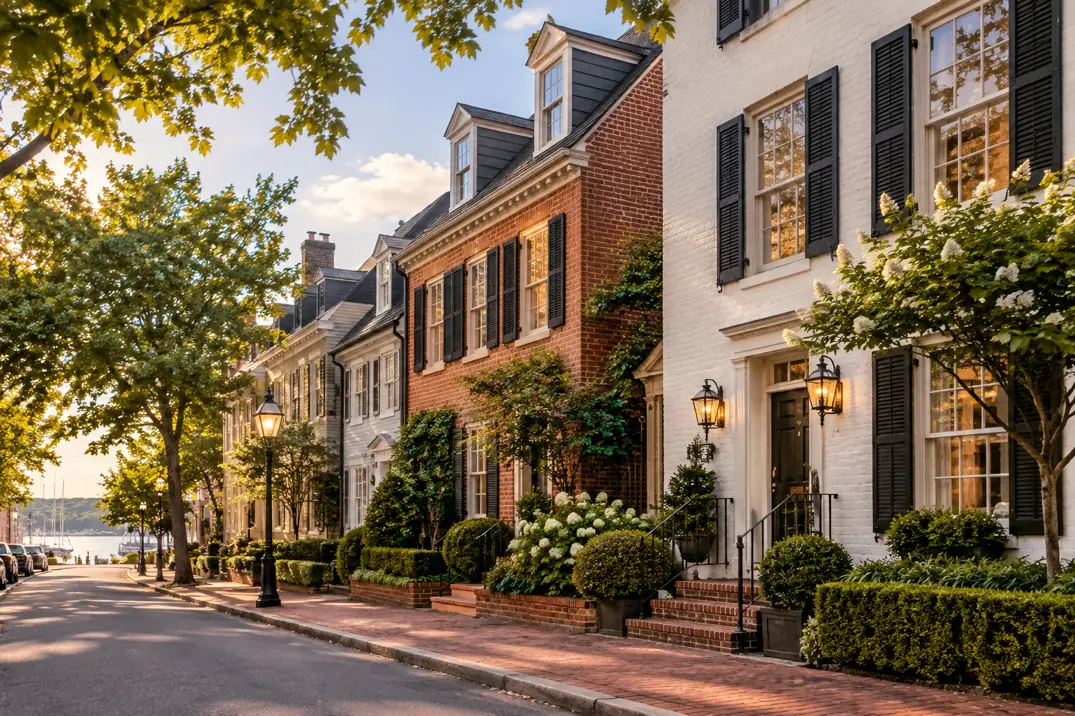
Location matters as much as the zoning district. In the Old and Historic Alexandria and Parker-Gray districts, new construction and any exterior alteration visible from a public way needs a Certificate of Appropriateness from the Board of Architectural Review (BAR), and demolishing more than 25 square feet of material requires a separate Permit to Demolish. On a narrow Old Town lot, that review sits on top of whatever the zoning ordinance already requires — it’s a design and materials conversation, not just a dimensions one. See our Old Town Alexandria page for more on building in that district.
Del Ray is a useful contrast. Its historic core, the Town of Potomac Historic District, is listed on the Virginia Landmarks Register and National Register of Historic Places, but as of 2026 that listing carries no local BAR authority — the city currently can’t regulate demolitions or exterior changes there the way it can in Old Town. Some Del Ray residents are pushing the city to create a local historic district or conservation overlay, so that could change; if you’re planning a narrow-lot build there, it’s worth asking Planning & Zoning whether anything is pending. Our Del Ray page has more neighborhood context.
What About the Building Code Itself?
Zoning determines whether you can build; Virginia’s building code shapes how the house is built once you’re close to a property line. Virginia’s Uniform Statewide Building Code adopts the International Residential Code by reference (the 2021 edition took effect in January 2024), and that code ties wall construction directly to “fire separation distance” — how far an exterior wall sits from the property line.
Under that code, walls 5 feet or more from the property line generally have no special fire-rating requirement. Walls between 3 and 5 feet need a rated wall assembly with limited window/door area, and walls under 3 feet need a rated wall with no openings at all. On a narrow lot with tight side yards, this is often the detail that decides where windows, garages, and even the stairs can go — so it’s worth having your builder check fire separation distance early, not after the plans are drawn.
How Character Companies Approaches a Narrow Alexandria Lot
We treat a narrow or substandard lot as a feasibility question first, design question second. That means pulling the zone’s actual width and frontage minimums, checking whether an SUP or BAR review applies, and running a rough FAR and setback envelope before anyone falls in love with a floor plan. It’s the same discipline we use on any tight infill lot, and it’s usually faster than discovering a setback problem mid-permit. If permitting timeline is on your mind too, our guide on how long permitting takes in Alexandria walks through what adds time to the process, including SUP and BAR reviews.
Frequently Asked Questions
What counts as a narrow lot in Alexandria? Alexandria’s zoning ordinance doesn’t set one citywide “narrow lot” width. Instead, a lot is “substandard” if it falls short of the minimum size, width, or frontage set for its specific zone — for example, under 65 feet wide in the R-8 zone. A lot can be substandard in one zone and perfectly conforming in another.
Do I need a Special Use Permit to build on a narrow lot? It depends on the zone. Alexandria requires SUP approval to build a new house on a vacant substandard lot in the R-2-5, R-5, R-8, R-12, and R-20 zones, and for redeveloping an existing substandard lot. Substandard lots outside those zones, including much of Old Town, generally don’t need one.
Are setback rules different for very narrow lots? Yes. Alexandria eliminated standard setback requirements for lots under 25 feet wide as part of its recent Zoning for Housing reforms. Height, FAR, and parking requirements still apply, so a narrow lot is easier to build on than before but not exempt from every rule.
Do I need Board of Architectural Review approval on a narrow lot in Old Town? If the lot is in the Old and Historic Alexandria or Parker-Gray districts, yes — new construction and exterior changes visible from a public street need a BAR Certificate of Appropriateness, regardless of the lot’s width. This is separate from, and in addition to, zoning review.
Does building on a narrow lot cost more? It can, mainly because of site work and foundation strategy rather than a “narrow lot fee.” Tight side yards can limit equipment access and push a design taller instead of wider, and any SUP or BAR review adds time. Get a site-specific estimate rather than assuming a flat premium.
Ready to Start Planning Your Custom Home?
A narrow lot in Alexandria is often more buildable than it looks — the key is confirming your zone’s rules, any SUP or BAR review, and your setback and FAR numbers before you commit to a design. Contact our team or call 703-520-2807 to walk through your specific lot with us.